
On Forcing Art
& Time Block Tools You Can Use

If you’ve been following along, I wrote about how to pay attention to our fears and longings the last few weeks. When you notice what’s causing the fear and what you desire, you can pinpoint how to move forward.
Another way to pay attention to your writing life is to look at where you’re forcing art. In our case, as writers, we can force content or ideas on ourselves or others, depending on a number of factors:
Deadlines we’ve got looming
Fear of irrelevance
Lack of ideas
Being burned out
A struggle with Imposter Syndrome
Lack of clarity on what we offer our readers
Trying to be something we’re not
To force art is to strain to produce when you’re not 100% sure it’s authentic, necessary, or solving a problem that your readers have. So, how do we know if we’re forcing it?
Questions to Ask as You Create
Here are a few questions I recommend asking each time you attempt creative work.
What is my purpose in creating this?
It could be that you’re inspired by a museum you visited, a walk you took, or a conversation you had with a friend. I’d say these are pretty authentic reasons for creating. You may or may not have an end goal for the creating, but you’ve got a true-to-you motivation. That’s a healthy start.
If I’m creating with joy or inspiration, am I also creating with an end goal in mind?
This is something you can consider as you create, before, or later. For most writers, we like to at least have an idea of where something could land before we create. But it’s not always the case.
On several occasions, I’ve had ideas for creative work — articles, characters for novels, and even dialogue for characters I haven’t written yet — that I jot down simply to remember them later.
I wouldn’t say any of that is forced. However, if you decide ahead of time that your creative work is going to be for a specific publication or it will only be for you, you’ve got some expectations to adhere to. If you only want your creative work to appear in said publication, you’ll need to look at that publication’s style guide, content calendar, and read some of the other posts or submissions they’ve said “yes” to in the past.
You might alter or change what you planned to write — which can be forced if you’re trying to fit your square idea into their round hole, whatever it is they need. This happened to me a few months ago when I considered writing for a specific publication where I’ve submitted articles in the past.
The pub had a themed issue, and I kept trying to make an idea I had work for their theme. In the end, I realized I was trying to force my original idea into their framework, and it just wasn’t working. I was essentially trying too hard to force them to “go together” in a way they just didn’t.
Am I creating out of habit, deadline, or drive?
I’m not going to tell you that a habit-driven creation is wrong; if we didn’t have some external forces or routines built in, we might not be consistent at our craft. I write this newsletter consistently (every single week) and want it to be helpful to those who subscribe.
So, yes, I create on a deadline and out of habit, but I also create out of drive. I don’t write anything here that isn’t something I’ve already been inspired to write. I draw inspiration from nature, fellow artisans, conversations with friends, and even my own struggles. They say to write what you know and that your reader is often yourself, so if that’s you, go for it.
However, if you’re only writing out of deadline or habit, and you aren’t inspired or writing from experiences you’ve had, it could keep your content stifled, flat, and not helpful. In other words, AI could’ve written it for all your readers know.
When there’s no personal stake in the creative work, there’s usually not a sense of connection to your readers, either.
What is my personal connection to this work?
I don’t mean the industry or the overall connection to podcasting or writing or illustrating. I mean what is your connection to this particular creative pursuit? If you’re drawing four sets of eyes on a sketch pad, are you connected to it because you’ve been thinking about how a person’s soul is evident in their eyes? Or are you just drawing eyes because your teacher assigned it? (If you’re in school, that’s valid, by the way.)
If you are simply drawing eyes because it’s what you know you’re good at drawing, that may not be the best expression of you connecting to the work. There’s a time and place for practicing the art, but that can’t be our reason for creating all the time.
Personal connection usually means your readers will also connect. Not always, but most of the time.
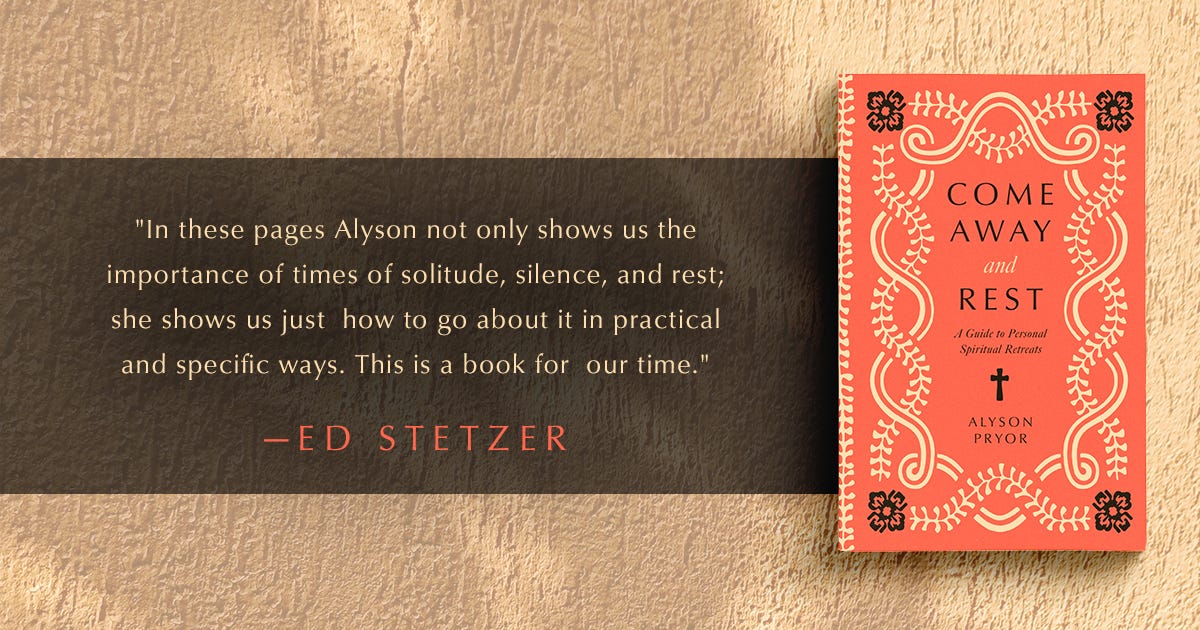
Speaking of personal connection, if you are a person of faith and feel like you’re losing your grip on connecting with God, I’ve got a recommendation you’ll want to grab today. It’s a book that is so practical for these days and times: “Come Away and Rest” is about making space for ourselves in a noisy, busy world to retreat with the ultimate Creator of all creatives.
Now, back to solving the problem of when we’re trying to force our creative work.
How to Solve Forced Work
If you recognize a tendency to force your creative work, or to write for unclear purposes and audience, I recommend a few solutions. Before I get into them, though, let me share a story.
A few months ago, I tried to resume running. I was once an avid runner who enjoyed long-distance races, and much of my social life was built around running.
I was in a running group, I showed up to running-related events, and I registered for races with friends.
However, an injury sidelined me one too many times, and I recognized a need to shift my activities. I started lifting weights, walking and occasionally throwing in a jog here or there. I’ve been following this program for about four years so when I decided to try running again, you can imagine the results.
I was tired.
I had very little stamina.
But I could steam up hills and run short distances pretty well.
Still, it discouraged me because I was accustomed to running long distances. Not only was I pretty good at it, but I also really enjoyed the longer routes: three, four or even six miles.
So, when I failed to build back up to long distances, I knew it was time to rethink why I was trying to run again. Was it really for the sheer joy of it?
I realized that my walks had given me joy in ways running hadn’t. First, I could walk with just about anyone. I didn’t have to sift through a cast of friends to find the one or two who ran. Walking is something many people do so it was easier to find walking buddies no matter where I was: at work, in a new neighborhood or at church. Second, I could go for a long walk if I had time or a short one, and I could still build in jogging time in the middle of a walk if I wanted to rev up my routine.
Unlike running, my walks could be more varied based on how much time I had and if I wanted to challenge myself. When I’d been an avid runner, I almost never took on new challenges that involved speedwork or running up the side of a mountain. I guess I could have, but it wasn’t enjoyable, didn’t seem to net the return on investment I would’ve liked, and just didn’t seem realistic for my stage of life.
In all these newer attempts to return to running, I realized that what I really enjoy is the opportunity to run occasionally but not force myself to run exclusively. I had always looked at exercise as a “must be a runner” or a “they’re walker” mentality. Instead, I enjoy the practice of walking with a little bit of running from time to time.
So I realized I’d been trying to force myself back to a sport that no longer served me and for what? So I could look like I looked 15 years ago? Or so I could try to find like-minded friends who ran races and spent much of their free time running?
I’m in a new season, so those old motivations just don’t apply to me anymore. I enjoy walking-with-running to stay in shape, but moreso to clear my head, process life, and enjoy time with family and friends. When I ran, I rarely talked (asthma) to my running partners and often dreaded having to attempt conversation while hitting top speed or distance.
So, how do you solve it when you recognize you’re forcing your art (or anything in life)?
Be honest with yourself. Admit what you’re really trying to achieve or why you feel the need to “accomplish” in that area of life or creative work.
Recognize the need beneath the force. Often, we’re searching for some kind of fulfillment we’re lacking; is it that you want to appear a certain way to that editor? Or are you comparing yourself to who you were 10 years ago? Did that colleague’s article make you want to write something just as thought-provoking? What is it that’s driving your forced rhythm or work?
Ask what you need. This means connecting the need from #2 with what your actual need is. Maybe what you realize is that your need for external validation stems from feeling left out or like you haven’t gotten encouragement lately. Or perhaps you realize your need in #2 comes from a desire to be liked. Where are you feeling less-than in your likability?
Look for, ask for, and be willing to wait for that need to be fulfilled in other ways. If you’ve seen that you really need encouragement, it might be time to open up to a trusted friend, spouse, or family member. Say out loud that you’re feeling a little less-than, and ask them how your life has benefited theirs lately? Sure, it may not relate to your creative pursuits — especially if that person isn’t your ideal audience or reader — but encouragement is encouragement. It can meet a need that you were trying to force through your creative work.
You can also bring your needs to God if you’re a praying person, knowing that His heart is to satisfy your needs. “And this same God who takes care of me will supply all your needs from his glorious riches, which have been given to us in Christ Jesus” (Philippians 4:19 NLT).
Where Force Serves Your Desire
In my last few essays, I’ve written about my career twists and turns. If you’re counting, we are up to Career No. 3. I left journalism behind to go into nonprofit mission work because I wanted my work to mean something.
In reality, after I left missions, I realized that all work means something if you’re in it for the right reasons. I stayed in nonprofit work after leaving full-time missions and found that, if I was inspired by the work I wrote about, I could find meaning in it. On the contrary, once my work started feeling flat and stale, I re-evaluated what was important to me at that life stage.
I ultimately decided to stay home with my children and pursue a freelance writing and editing career because it aligned with what mattered most to me: flexibility and time with my family. I also discovered that while I love to write, I’m equally jazzed up by the ability to help others write their very best.
That’s why I started Turbowords Editing. I work with first-time and multi-time authors, editing their work and helping them improve their manuscripts to meet their readers where they are. I also coach writers to help them overcome areas where they are stuck. It’s fulfilling because I get to champion someone else’s work, discover incredible creators, and highlight topics I myself wouldn’t ordinarily write about.
So, pay attention to the forced work; it can help you discover what you need most right now and what you truly want.
Last week, I attended a writers conference out of town, and it was hilarious to me how many writers struggle with the same things. We think we’re so unique, and in many ways we are as people, but really, we are all alike in our shared humanity, struggles with comparison, and desires to meet needs and solve problems we once had.
An example of this is when the conference emcee had everyone complete a BINGO board that had a bunch of reasons we stop writing or let work go unfinished. The reasons ranged from feeling like we’re not good enough of a writer to questioning if our ideas are any good. Others were not understanding how to get published — or if we even wanted to be published — and not being clear on what we had to offer.
The funny thing about this exercise was that even the most widely published writers still had some of the same struggles that the beginning writers wrestled with. What a joy to know we’re not alone, no matter how lonely this writing gig feels.
If you’d like to have a coach walk alongside you and help you figure out how to solve some of your writing struggles, I’d be delighted to schedule a free discovery call with you to see if my coaching style would be a good fit. On the other hand, if you think you’re ready for an editor but aren’t sure, I can talk you through that decision-making process, too. I don’t ever advise someone to launch into editing before they’re ready.
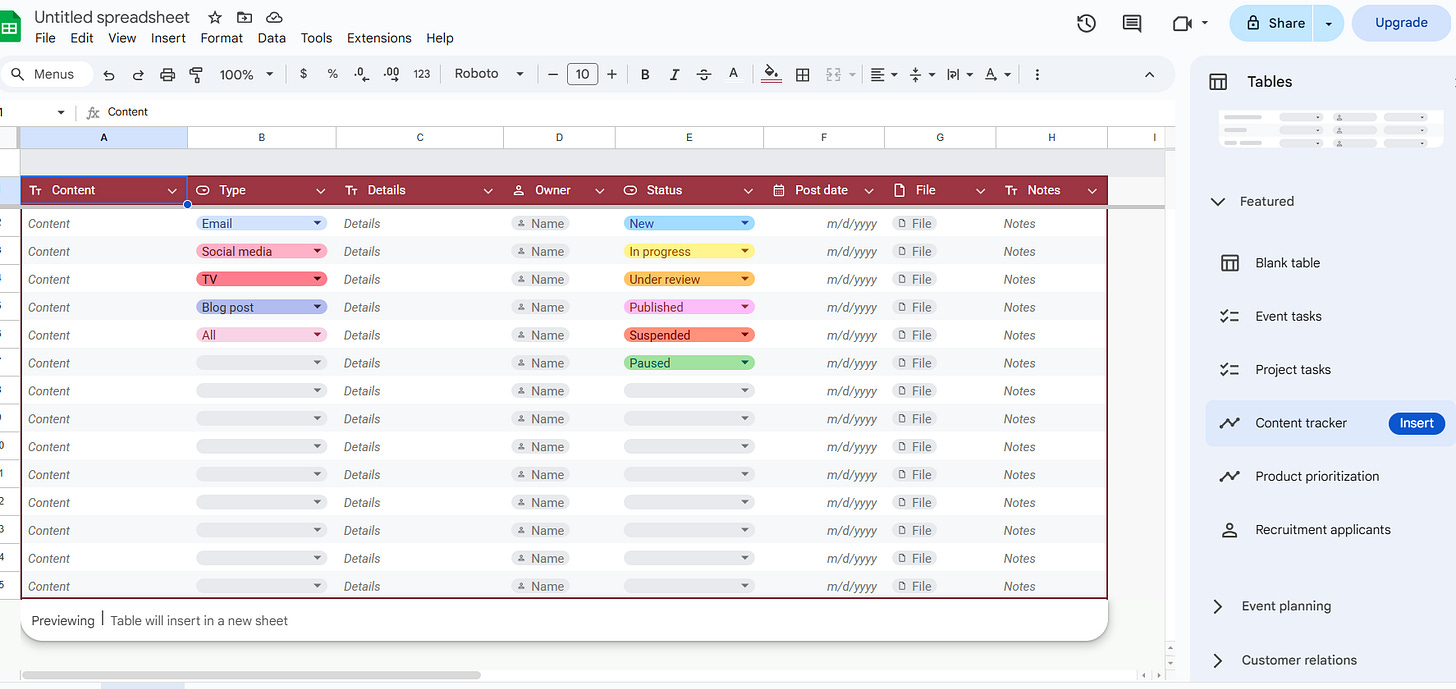
Something I’ve been paying attention to this week is how efficiently I plan content. (Or not.) One of the biggest problems I faced was writing consistently. When I reflected on why it was such a struggle, I realized that half the battle was deciding what to write. So I created a content calendar template that you can use too! It’s amazed me how this simple tool — which I complete about once a month — revolutionized my ability to write consistently without panicking about what to write. I hope it helps you, too.
So, here are two tools I’ve been using.
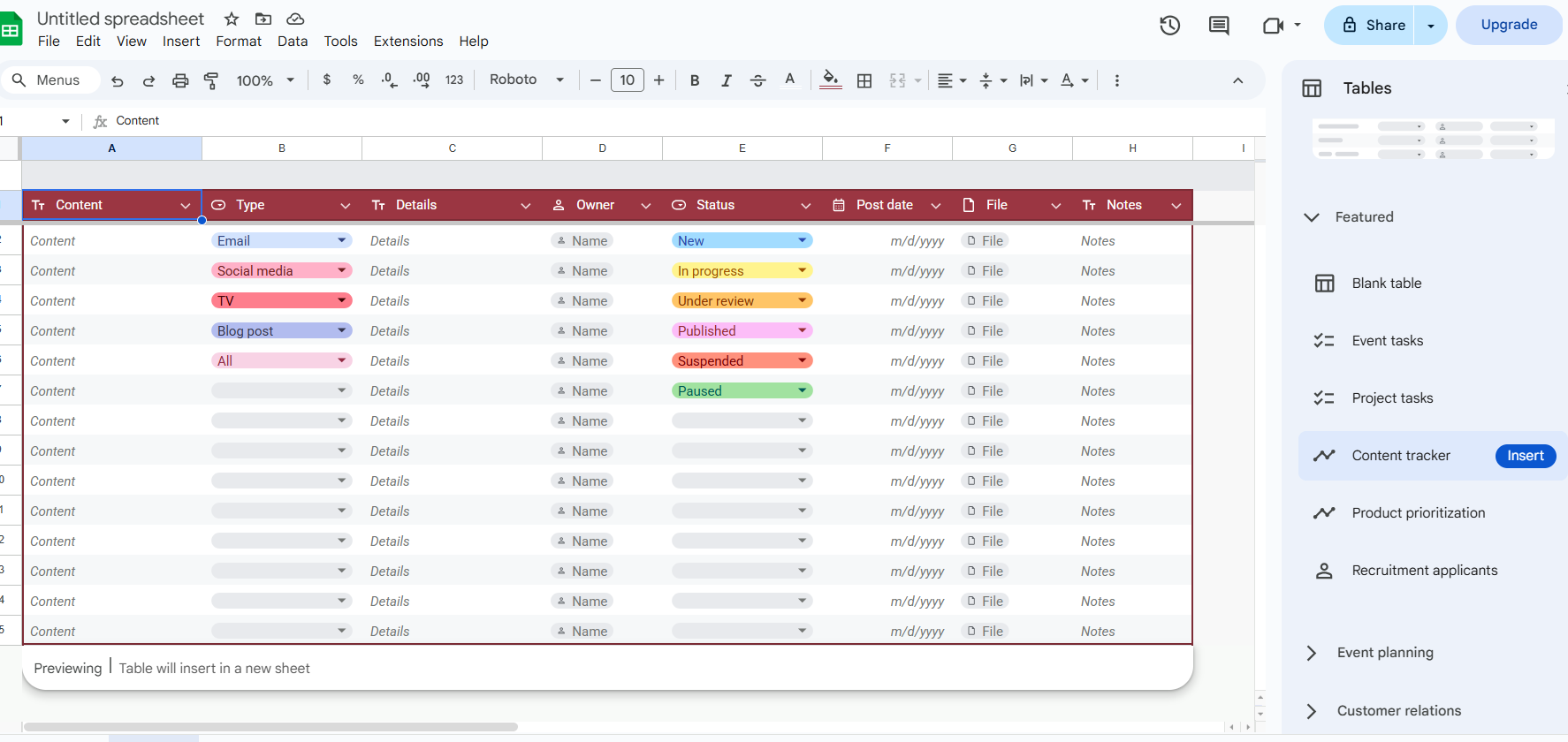
The “content tracker” feature in Google Sheets. (Just navigate to “insert” and then on the right side of your Google Sheet, you’ll see a menu where you can choose content tracker and set up your own variables to track projects.)
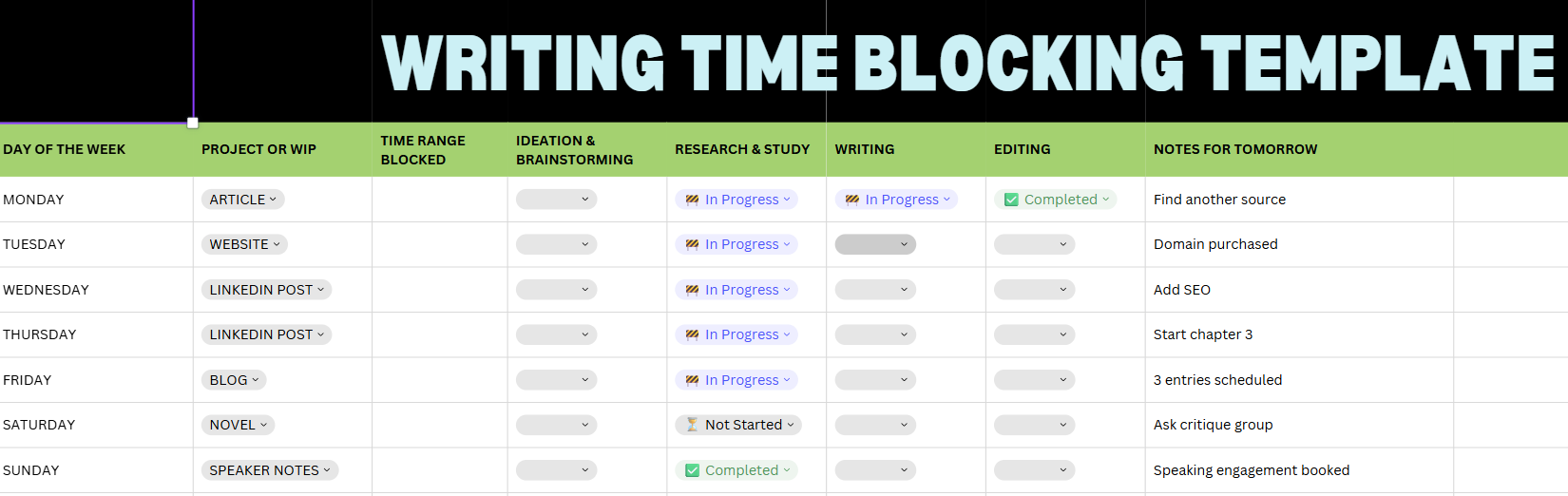
2. The Writing Time Blocker template I created to help you block your writing time for various projects. I use it to help me set aside time for specific types of work. Since I have multiple clients, I like to differentiate blocks of time for editing, consulting/coaching, social media management, and my own personal writing projects.
Since you’re a paid subscriber, you’ll have access to this resource for free.
Thank you for your subscription, and I’ll see you next week!
About Me & OnStories
Hi. I’m Brooke, a wife, mom to two teens, copy editor, writing coach and writer. I help you pay attention to your writing and daily life so you can make intentional choices in both. I know you could choose anyone’s newsletter to read or subscribe to, so thank you for choosing this one. If you like this post, I’ll be sending three additional emails each month to paid subscribers (starting on Friday, February 6th). Next week, I’ll continue sharing some of the paid-subscription specifics I’ve been hinting at, including pop-up book club, attentiveness resources, and tools to make the writing life more doable.